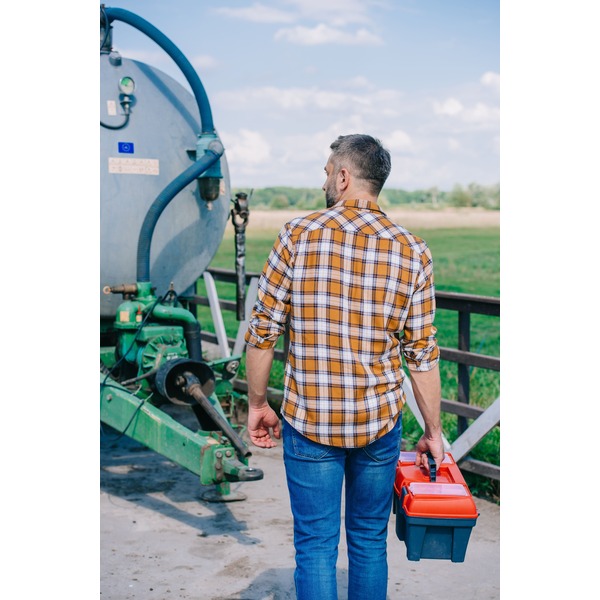
Where is the farmer toolbox in the Commission’s work programme?
February 2025
This week, the Commission officially announced its work programme for 2025, foreshadowing the priorities for the next five years. The first priority listed is the “need to remove structural brakes on the EU’s competitiveness,” which is an objective we laud. However, the measures outlined for improving agricultural competitiveness don’t stand up to the work programme’s ambition (as stated in its title) that the actions foreseen are “bold” with absolutely no mention of the urgent need to reinforce farmer toolboxes
Reducing paperwork and administrative burdens are worthy goals, but they lose sight of the wider vision: empowering farmers to grow crops competitively and sustainably. The key to competitive, sustainable, resilient, and crisis-ready agriculture in Europe is the farmer toolbox. Farmers are innovators and entrepreneurs, but their ability to do either successfully is dependent on access to a wide range of safe and effective tools like plant protection products, fertilisers, plant biostimulants, appropriate seed varieties, and digital technologies, as well as financing and rick mitigation tools such as crop insurance.
Farmers need access to a wide range of tools to fight pests and diseases, to adapt to the effects of climate change, and to meet consumer demands in various market segments. In short, if farmers are not sufficiently armed to fight growing pressure from pests and diseases, they and Europe’s food supply are vulnerable to significant disruptions. When considering critical dependencies, it is vital that the Union also understand the dangers of these internal overdependencies on a limited number of plant protection tools. Biocontrol products are a case where farmers urgently need more tools:
- As climate change has made winters milder, more pests are overwintering. Changing rain patterns mean that fungal infections have become more prevalent in certain areas. As farmers on the borders of the EU have changed what they are planting, corridors now exist for certain pests to enter the EU.
- Yet, there has been a net loss of 5 biocontrol active ingredients since 2019. Two years had passed without such a registration until three microorganisms were recently approved.
- The net loss of biocontrol active ingredients has been against a background where the overall toolbox for fighting pests and diseases has shrunk by 1/3 since 2017 (a loss of about 100 active ingredients).
- The picture is even grimmer when you look at specific crop-pest combinations instead of average numbers. There are some use cases where farmers no longer have any effective tools. In other cases, there is only one mode of action left, which makes pest resistance more likely. (Examples of use cases where there are no (or very few) tools can be found in the online database compiled by German authorities
There are elements of the Commission’s work programme that could serve the goal of enriching the farmers toolbox, and we hope that they will be harnessed and articulated in future announcements to ensure that all EU farmers have access to a wide range of plant protection products at competitive prices:
- The Vision for Agriculture and Food, which the Commission is expected to publish on 19 February, is an opportunity to correct the omission of the farmer toolbox as a critical lever for improving the capacity to farm competitively and sustainably.
- The Single Market Strategy foreseen for Q2 is an opportunity to focus on the absence of a Single Market for many farming inputs (like biocontrol products) and to make it a priority to enrich the farmer toolbox urgently. We laud the Commission’s intention to address goldplating, a common problem for bringing biocontrol products to market in a timely manner and a major obstacle for startups in particular.
- Reducing administrative burdens by at least 25% through simplification and 35% for SMEs could help to speed up the approval process for biocontrol products, which is particularly important for startups, who are under pressure from investors to start having revenue streams as quickly as possible.
- We welcome the emphasis on creating a shared sense of responsibility with the European Parliament and various Council formations through regular cooperation annual progress reports on enforcement and implementation.