
February 2024
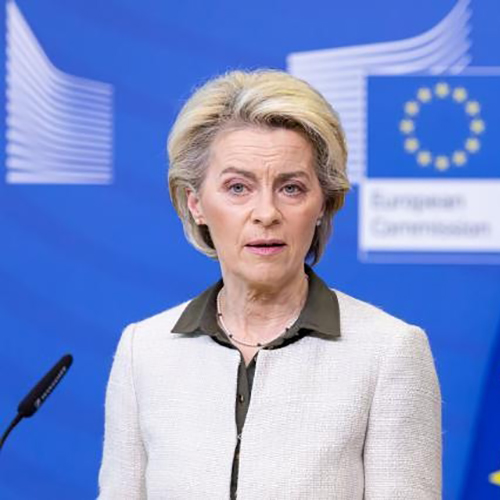
Speaking to a plenary of the European Parliament on 6 February, President von der Leyen announced that the Commission would withdraw its proposal for a regulation on the sustainable use of pesticides (commonly referred to as the SUR). While reporting on the recent European Council meetings, she noted that the text had become a lightning rod for polarization. However, she emphasized that “the topic stays”. And to move forward, more dialogue and a different approach is needed. And on this basis, the Commission could make a new proposal with much more matured content and with the stakeholders together.”
Our coalition advocates for a specific item in the next EU Work Programme (2024-2029) on promoting biocontrol innovation, which would be an ideal outcome of Mrs. Von der Leyen’s promise to work on a more mature text together with stakeholders. The aims of the SUR were, in her words, “worthy”, but they were completely disconnected from reality. Today, it takes 8-10 years to place a biocontrol product on the EU market (2-3 times longer than in Brazil or the USA), and only 5-6 biocontrol products have come to market per year over the past decade. This is not due to a lack of research and innovation; it is due to a regulatory framework that is not fit for purpose. There is no way to achieve the ambitious targets for increasing biocontrol uptake by 2030 as proposed by some parties during the SUR negotiations without fixing the regulatory backlog.
Key elements of a framework optimised to encourage biocontrol innovation include a single authority and timely one-step evaluation, which would:
The feed sector provides a precedent showing this approach is feasible.
Today, there is no Single Market for biocontrol products. Not only are European farmers at a competitive disadvantage with regard to access to biocontrol products relative to growers in global agricultural powerhouses like Brazil and the USA, farmers from smaller EU countries have fewer tools in their plant protection toolbox than their colleagues in large EU countries.
The Biocontrol Coalition comprises multiple stakeholders, including consumers, farmers, and industry. Together, we are committed to working with policymakers to redesign the regulatory framework for biocontrol. We believe that a regulatory framework that truly fosters biocontrol innovation will help all of our organizations achieve our objectives; we are all moving in the same direction. There is no reason for polarization.